
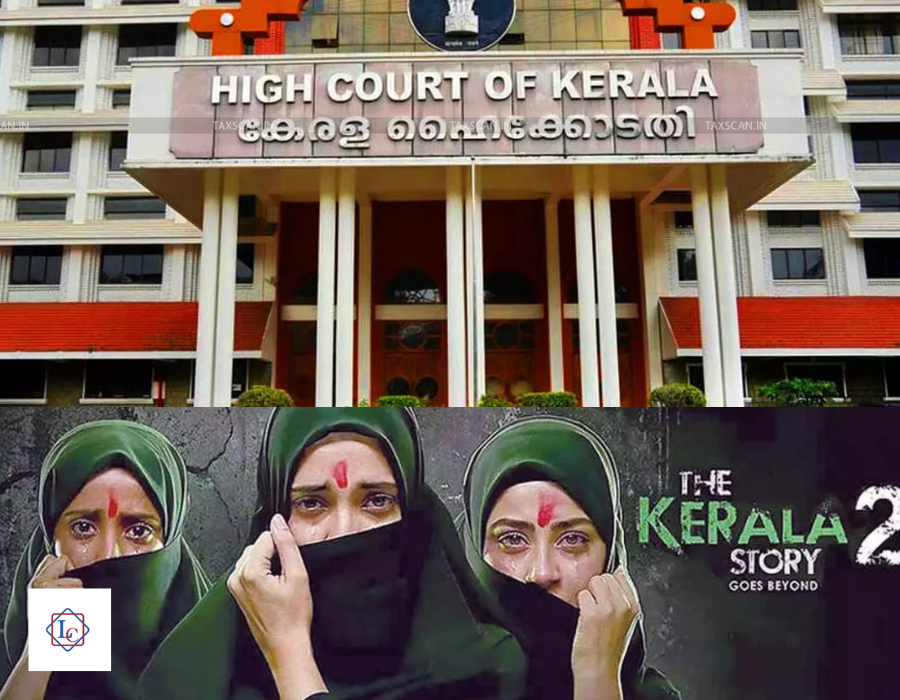
A Division Bench of the Kerala High Court stayed the single judge’s order that had halted the release of ‘The Kerala Story 2: Goes Beyond’, paving the way for its theatrical release. The Bench questioned whether the petitions were in the nature of a PIL that ought to have been heard by a Division Bench at the outset.
The Kerala High Court on Friday cleared the way for the theatrical release of the film ‘The Kerala Story 2: Goes Beyond’, staying a single judge’s interim order that had halted its release just a day earlier. The division bench of Justices Sushrut Arvind Dharmadhikari and P.V. Balakrishnan passed the order in writ appeals filed by producer Vipul Amrutlal Shah against the common order of Justice Bechu Kurian Thomas, who had stayed the film’s release for 15 days.
The appeals were heard at an urgent sitting convened at 7:30 p.m. on Thursday, just hours after the single judge pronounced the interim order. Arguments continued for over two hours before the Bench reserved its verdict, which was delivered on Friday afternoon. A detailed order is awaited.
The controversy arose from three petitions filed before the court challenging the certification granted to the film by the Central Board of Film Certification. Petitioners Sreedev Namboodiri and Freddy V. Francis contended that the film misrepresents Kerala and that its release could incite communal disharmony. They sought quashing of the certificate, modification of the title to a neutral name, and removal of the tagline “inspired by true events”.
Justice Thomas, in his interim order on Thursday, had observed that the content in the teaser itself had the “prima facie potential to distort public perception and disturb communal harmony”. The court had noted that Kerala, otherwise known for its communal harmony, could be identified by viewers across the world as a hub of fanatical and communal divide. The single judge directed the CBFC to consider the revision petitions filed by the petitioners within two weeks and restrained the film’s release during this period.
Senior Advocates Neeraj Kishan Kaul and Elvin Peter, appearing for the producer, assailed the interim order on multiple grounds before the Division Bench. Senior Advocate Kaul submitted that the writ petition was filed 16 days after the teaser was released, and even the single judge had described the matter as being moved at the “eleventh hour”. He pointed out that when the prequel was released in 2023, no stay had been granted, and that film went on to receive a National Award.
Emphasising artistic freedom, Senior Advocate Kaul submitted that the storyline of a film is the prerogative of the storyteller. He argued that the present sequel expands beyond Kerala, with protagonists from Rajasthan and Madhya Pradesh as well. Questioning the basis for judicial intervention, he submitted that, “Are we so frail that a movie would scandalise or shake the faiths and tenets of a religion?”
The producer’s counsel highlighted the commercial ramifications of the stay, submitting that the film was slated for release in 1,500 theatres in India and 335 theatres overseas. Senior Advocate Kaul contended that commercial disruption could curtail free speech and destroy the prospects of a filmmaker. He relied on the Supreme Court’s recent judgment in Mangal Rajendra Kamthe v. Tahsildar, Purandhar, which deprecated the practice of high courts granting interim relief while relegating parties to statutory authorities.
Senior Advocate Peter focused on the maintainability of the writ petitions and the locus of the petitioners. He contended that the matter was in the nature of a public interest litigation and ought to have been heard by a division bench at the outset. He also pointed out that the CBFC had suggested 16 cuts in the film, resulting in the removal of nearly two minutes of footage, which clearly demonstrated application of mind by the certification body.
The Division Bench, during the hearing, remarked that the single judge seemed to have exceeded his jurisdiction in hearing the matter. Justice Dharmadhikari observed that, “Order passed by any bench outside jurisdiction will be automatically nullified.” The court also opined that the single judge order seemed to have been passed in haste, remarking that, “Everything has been done in haste. Nobody had time to apply their mind.”
Advocate Maitreyi Hegde, appearing for petitioner Freddy V. Francis, defended the locus standi of her client. She argued that the fundamental right to life guaranteed under Article 21 of the Constitution includes the right to reputation, which encompasses a person’s entire personality and the region to which they belong. She contended that a bad portrayal of Kerala affects individual reputation and rights.
Advocate Hegde relied on the Supreme Court’s judgment in the Ghooskar Pandat case, where the title of a movie was ultimately changed, to support the contention that a community cannot be denigrated. She also raised a grievance regarding the timing of the appeal hearing, submitting that copies were provided only 10 minutes before the scheduled hearing at 7:30 p.m.
Advocate Sreerag Shylan, appearing for petitioner Sreedev Namboodiri, pointed out that the prequel was originally promoted as being inspired by true events, but by the time its challenge reached the Supreme Court, the stance had changed to claim the movie was purely fictional. He submitted that the promotion of the present film again suggested it was based on true events, which could create enmity towards a particular region.
The single judge had earlier expressed willingness to watch the movie before deciding the case, but the producer declined. Justice Thomas had noted in his order that dissemination of content which has a tendency to create discord, disturb law and order, and undermine social harmony cannot come within the ambit of freedom of speech and expression enshrined in Article 19(1)(a) of the Constitution. The court had also observed that the CBFC prima facie ignored the Central Government’s guidelines under Section 5B of the Cinematograph Act, 1952 against presentation of visuals contemptuous of racial, religious or other groups.
The film, directed by Kamakhya Narayan Singh and produced by Vipul Amrutlal Shah, is a sequel to ‘The Kerala Story’ released in 2023. The franchise has depicted narratives involving alleged recruitment of women into Islamic extremism and purported forced religious conversions. The case has been posted for further hearing after two weeks.


Leave a Reply