
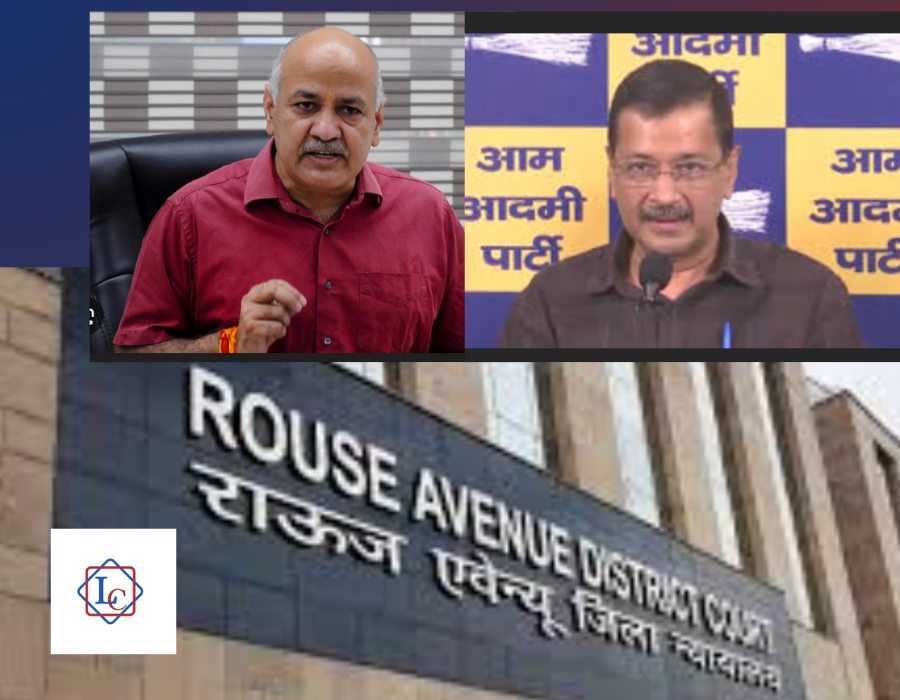
A Delhi court on Friday discharged former Chief Minister Arvind Kejriwal, former Deputy Chief Minister Manish Sisodia and 21 others in the CBI’s excise policy corruption case, holding that the agency failed to make out a prima facie case and had implicated the accused without cogent material.
A Delhi court on Friday discharged former Chief Minister Arvind Kejriwal, former Deputy Chief Minister Manish Sisodia and 21 others in the corruption case relating to the alleged liquor policy scam, bringing the Central Bureau of Investigation’s prosecution to a close at the trial stage.
Special Judge Jitendra Singh of the Rouse Avenue Courts refused to frame charges against any of the 23 accused, holding that no prima facie case was made out and that the prosecution’s narrative did not survive judicial scrutiny. The court observed that there was no overarching conspiracy or criminal intent in the formulation of the now-scrapped Delhi Excise Policy 2021-22.
The judge, in a detailed order, criticised the CBI’s investigation in strong terms. The voluminous chargesheet running into thousands of pages contained several lacunae not supported by any witness statements or substantive evidence, the court noted, adding that it included “misleading averments” and internal contradictions that struck at the very root of the alleged conspiracy theory.
On Sisodia, who was accused of being the person responsible for the formulation and implementation of the liquor policy, the court held that the CBI had failed to establish a prima facie case. There was no evidence showing his involvement, and neither was there any recovery of incriminating material or proceeds of crime from him, the judge observed.
Regarding Kejriwal, the court concluded that he had been implicated without any cogent material, a position it described as “inconsistent with the rule of law especially when it concerns a person who holds a constitutional post.” In the absence of fundamental material, statement or evidence, the attribution of Kejriwal to the alleged conspiracy could not be sustained, the judge held.
The court also expressed surprise at the CBI’s decision to name public servant Kuldeep Singh, the then Deputy Commissioner of Excise, as accused number one despite there being “absolutely no material” against him. It ordered a departmental inquiry against the investigating officer, describing the probe as appearing “pre-meditated and choreographed.”
The CBI had alleged that Rs 100 crore was paid by a “South Lobby” to influence the proposed excise policy in its favour. The agency contended that leaders of the Aam Aadmi Party had received kickbacks from liquor manufacturers in exchange for policy concessions benefiting select licensees. Additional Solicitor General DP Singh and advocate Manu Mishra, appearing for the CBI, had argued that the offence of conspiracy must be viewed in its entirety and that there was sufficient material to frame charges.
Senior Advocate N Hariharan, representing Kejriwal, countered that no incriminating evidence linked his client to the alleged conspiracy. He submitted that Kejriwal was not named in the initial chargesheet or the first three supplementary chargesheets, and his name appeared only in the fourth supplementary filing, which he described as a “cut-and-paste job” repackaging earlier allegations tied to official duties as Chief Minister. The defence also questioned the evidentiary value of statements by approver Raghav Magunta.
Senior Advocate Rebecca M John along with Advocate Vivek Jain appeared for Sisodia. Advocate Sumer Singh Boparai appeared for Abhishek Boinpally.
The case originated from a July 2022 report by Delhi’s Chief Secretary Naresh Kumar to Lieutenant Governor VK Saxena, which alleged procedural lapses in the creation of the excise policy. The report had claimed that Sisodia, who also held the Excise portfolio, made “arbitrary and unilateral decisions” that caused financial losses to the exchequer exceeding Rs 580 crore. The LG subsequently ordered a CBI probe, and the policy was withdrawn by September 2022 amid the allegations.
Sisodia was arrested by the CBI on February 26, 2023 and later by the Enforcement Directorate on March 9, 2023. He spent approximately 530 days in custody before being granted bail by the Supreme Court in August 2024. Kejriwal was formally arrested by the CBI on June 26, 2024, while already in ED custody in the connected money laundering case. He spent approximately 156 days in jail across two periods before being released on September 13, 2024, after the Supreme Court granted him bail.
The other accused discharged in the matter include Kuldeep Singh, Narender Singh, Vijay Nair, Abhishek Boinpally, Arun Ramchandra Pillai, Mootha Gautam, Sameer Mahendru, Amandeep Singh Dhall, Arjun Pandey, Butchibabu Gorantla, Rajesh Joshi, Damodar Prasad Sharma, Prince Kumar, Arvind Kumar Singh, Chanpreet Singh Rayat, K Kavitha, Durgesh Pathak, Amit Arora, Vinod Chauhan, Ashish Chand Mathur and Sarath Chandra Reddy.
The CBI has announced that it will challenge the discharge order before the Delhi High Court “immediately.” A spokesperson for the agency stated that the appeal is necessary since “several aspects of the investigation have either been ignored or not considered adequately” by the trial court.
The discharge order applies only to the CBI case. The parallel money laundering investigation by the Enforcement Directorate remains ongoing.
Speaking to reporters outside the court, a visibly emotional Kejriwal alleged that the case was “the biggest political conspiracy in independent India” orchestrated by Prime Minister Narendra Modi and Union Home Minister Amit Shah to “finish AAP.” He stated that the court had proved that “Kejriwal, Manish Sisodia and AAP are kattar imaandaar.”
Sisodia described the verdict as a vindication. He stated that, “Despite all the attempts by Modi Ji’s entire party and all their agencies to prove us dishonest, today it has been proven that Arvind Kejriwal and Manish Sisodia are staunchly honest.”
The BJP responded by stating that the court had discharged the accused due to lack of evidence and described the matter as “technical.” The party added that the CBI would take the matter to the High Court.
Case Title: Central Bureau of Investigation v. Kuldeep Singh & Ors.


Leave a Reply