
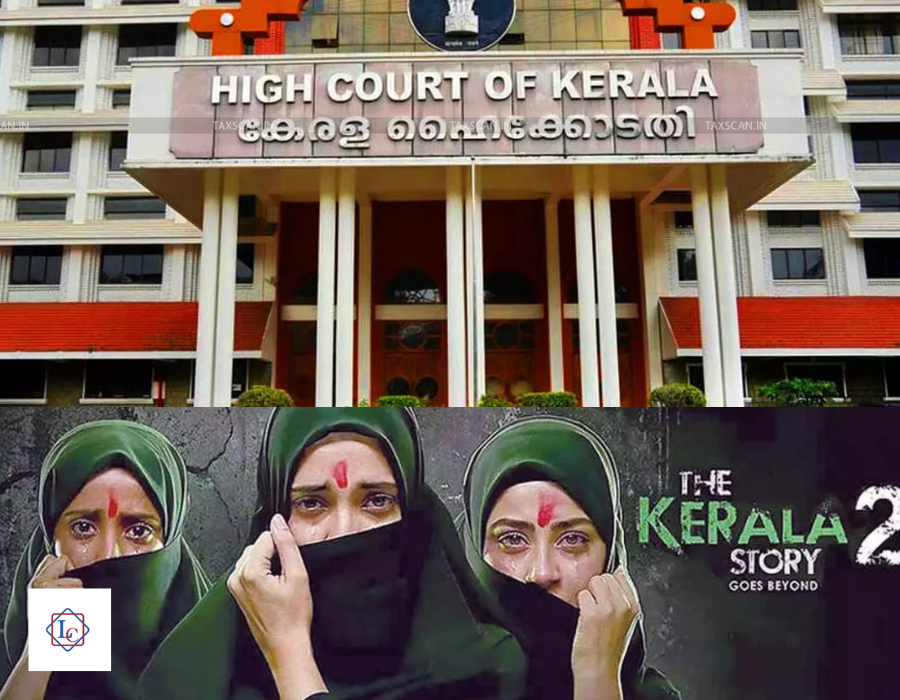
A fresh public interest litigation has been filed before the Kerala High Court seeking a direction to re-title ‘The Kerala Story 2: Goes Beyond’ to exclude the word “Kerala”, arguing that the title stigmatises the State and its Muslim community by portraying Kerala as the epicentre of forced religious conversions.
A fresh public interest litigation has been filed before the Kerala High Court seeking a direction to re-title the film ‘The Kerala Story 2: Goes Beyond’ so as to remove the word “Kerala” from its name. The plea, filed by a retired social science teacher and a Muslim woman advocate practising before the court, comes days after the film was released following a dramatic legal battle that saw a single judge’s stay order overturned by a Division Bench within hours.
The petitioners have sought a direction commanding the Union Government and the Central Board of Film Certification to ensure that the film is not exhibited, broadcast, streamed or advertised under a title containing the words “Kerala” or “Keralam”. They have also prayed for the producer to be directed to re-title the film in a manner that does not stigmatise or defame the State or its people.
The PIL contends that although the film portrays protagonists from three States, the use of “Kerala” in the title, combined with the filmmakers’ claim that the stories are inspired by true events, creates enmity against the Muslim community in the State, which is portrayed as the epicentre for forced religious conversions. The petitioners have pointed out that when the filmmakers introduced certain women as victims of forced conversions at a promotional event, none of them were from Kerala.
A significant portion of the plea addresses the manner in which the Division Bench hearing was obtained. The petitioners have stated that the producer secured an urgent listing at 7:30 p.m. on 26 February, just hours after the single judge’s interim order was pronounced. The PIL describes this as occurring in “absolute haste and most unprecedented manner”, leaving little realistic opportunity for a considered appreciation of the single judge’s detailed reasoning on the risk to communal harmony and the statutory duties of the CBFC under section 5B of the Cinematograph Act, 1952.
The petitioners have also sought a direction for the film to be screened with a disclaimer stating that it is purely fictional and that there is no authentic data or official finding supporting the allegation that Kerala is a hub of terrorism or that Sharia law is sought to be enforced across India. They have referred to the Supreme Court’s observations in Atul Mishra v. Union of India, concerning the Netflix film ‘Ghooskar Pandat’, wherein the Court remarked that movie titles cannot be used to denigrate a particular community.
As a general prayer, the PIL seeks a direction to the Union Government and the CBFC to frame guidelines governing the titling and marketing of films, ensuring that titles and taglines do not denigrate, stereotype or hold up to hatred any identifiable State, region, caste, religious or other community.
The petition has been filed by Advocate Chelson Chembarathy on behalf of Chandramohan K.C. and another.
Background:
The Kerala Story 2: Goes Beyond, produced by Vipul Amrutlal Shah and directed by Kamakhya Narayan Singh, is a sequel to the 2023 film The Kerala Story. The franchise depicts narratives involving alleged forced religious conversions and recruitment of women into extremism.
The film’s release on February 27, 2026, was preceded by intense legal proceedings. On 26th February, Justice Bechu Kurian Thomas of the Kerala High Court stayed the film’s release for 15 days, observing that the teaser content had the prima facie potential to distort public perception and disturb communal harmony. The single judge also directed the CBFC to re-examine the certification.
Hours later, the producer filed an appeal, and a Division Bench comprising Justices Sushrut Arvind Dharmadhikari and P.V. Balakrishnan convened an urgent sitting at 7:30 p.m. the same evening. After over two hours of arguments, the Bench reserved its verdict.
On 27th February, the Division Bench lifted the stay, observing that the petitions were in the nature of a PIL and questioning how the single judge could have heard the matter.
The Bench relied on the Supreme Court’s judgment in Viacom18 Media Private Limited, holding that once a certificate is issued, there is a prima facie presumption that the certifying authority has considered all guidelines including public order. The film was released from the evening shows on the same day.
Earlier petitions by Sreedev Namboodiri and Freddy V. Francis had challenged the CBFC certification on grounds that the film’s title and promotional material unfairly stigmatised Kerala and could incite communal disharmony. One of the prayers in those petitions had also sought removal of “Kerala” from the title.


Leave a Reply