
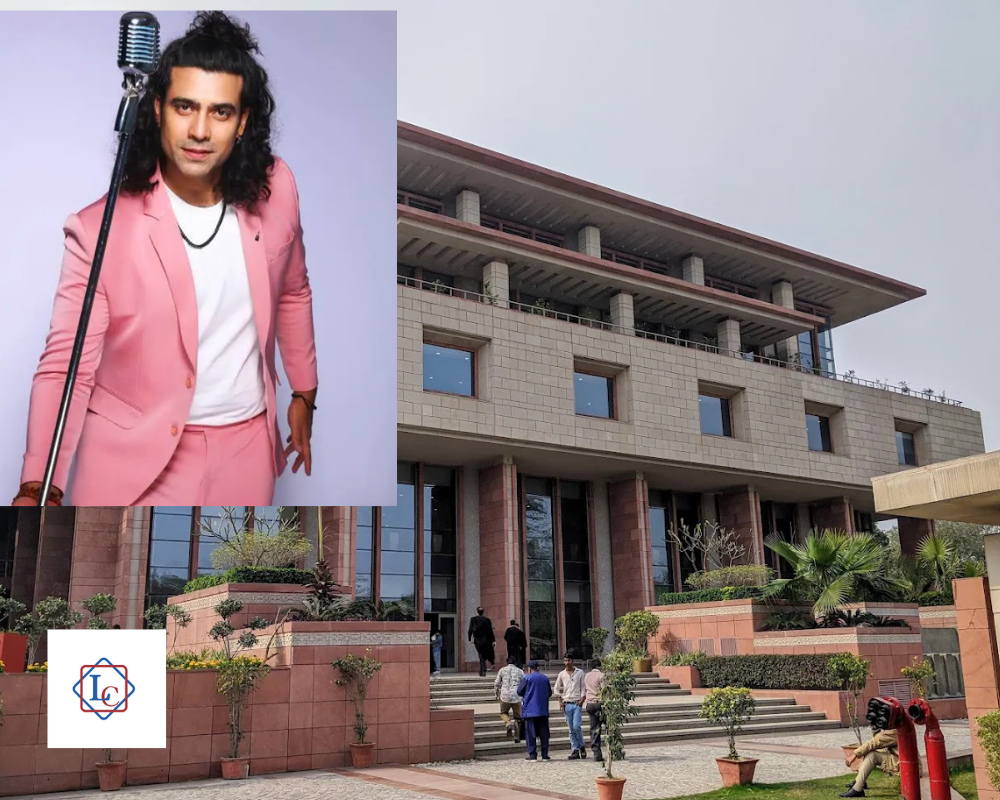
The Delhi High Court granted singer Jubin Nautiyal an ex-parte ad-interim injunction protecting his personality rights against AI deepfakes, voice cloning, and unauthorised merchandise, adding to a growing wave of John Doe orders sought by celebrities including Aishwarya Rai Bachchan, Karan Johar, and Sadhguru.
Table of Contents
THE Delhi High Court has granted singer Jubin Nautiyal an ex-parte ad-interim injunction protecting his personality and publicity rights against the unauthorised use of his name, voice, image, and likeness by artificial intelligence platforms, e-commerce websites, and unidentified entities.
Justice Tushar Rao Gedela passed the order on February 19, 2026, restraining multiple defendants from creating or disseminating AI-generated content, deepfakes, voice clones, and merchandise that exploit the singer’s persona for commercial gain.
The court observed that Nautiyal had established a prima facie strong case for protection. “In the considered opinion of this Court, the plaintiff has a prima facie strong case and having regard to his well-known, popular and well-accepted personality, the balance of convenience is tilted in favour of the plaintiff,” Justice Gedela held.
The court further noted that failure to grant immediate relief would cause irreparable harm to the singer’s reputation and identity, adding that, “the irreparable loss and injury which may occasion may not be compensated in monetary terms. The dent and damage to the image and personality of the plaintiff, prima facie, appears to be real and present.”
Nautiyal, a renowned playback singer who has won accolades including IIFA, IIA, ITA, and Mirchi Awards, alleged in his plaint that defendants were infringing his publicity and personality rights through various means.
Also read: West Bengal SIR
These included using artificial intelligence to morph his face onto videos, distorting his facial expressions, overlaying profane audio clips onto video clips of him, and creating AI platforms that permit unlicensed chatbots using his persona. The singer also alleged that his images, signature, and other elements were being affixed to merchandise and sold without authorisation.
The court restrained the defendants and John Doe entities from directly or indirectly using or exploiting Nautiyal’s personality rights through advertisements, merchandise, domain names, AI voice models, synthesised voices, digital avatars, deepfakes, face morphing, or any similar technological means across online platforms, social media, websites, and the metaverse.
Justice Gedela directed online intermediaries and e-commerce platforms to take down or block access to identified infringing URLs, posts, videos, and applications. The platforms were also directed to disclose available details of entities operating such content to assist in identifying violators.
The Union Ministry of Electronics and Information Technology (MeitY) and the Department of Telecommunications (DoT) were impleaded in the matter to facilitate implementation of the court’s directions.
The matter has been listed before the Joint Registrar on 28 April for completion of service and pleadings, and will be taken up by the court on August 25, 2026.
Why not local courts? Delhi High Court questions celebrity forum shopping
During the hearing, Justice Gedela raised pointed questions about territorial jurisdiction and why celebrities are not approaching their local courts for personality rights protection. The judge noted that Nautiyal is based in Uttarakhand and questioned why he chose to file the suit before the Delhi High Court instead of courts in his home state.
“Why are you here? What is accessible here is accessible there. The courts there aren’t abolished yet,” Justice Gedela remarked at the outset.
The court further questioned whether digital platforms like Google are somehow unavailable in Uttarakhand, asking, “What is the reason for coming here? Court in Uttarakhand can’t call them [defendants] and pass directions? Are you saying Google is not available in Uttarakhand? You have to tell us this, no? Why Uttarakhand doesn’t have jurisdiction when you yourself are located there?”
The court also noted that some of the defendants against whom Nautiyal was seeking an injunction were based in Romania and the UAE, and questioned whether the presence of central ministries in Delhi automatically confers jurisdiction.
“Is it the law that because the ministry is here, whatever will be against them, all jurisdiction, whether from Madras, Calcutta or Bombay will come here?” Justice Gedela asked.
The court termed the reliance on the presence of MeitY and DoT as “irrelevant”, observing that, “Merely because MeitY and DoPT are here, jurisdiction is conferred here? What is the jurisdiction here?”
Justice Gedela clarified that the ministries were impleaded only for compliance purposes and not as actual defendants against whom infringement was alleged. “Your concern is infringement. Not implementation. They are only for compliances…. You don’t have anything against them,” the court observed.
Nautiyal’s counsel sought to justify the forum selection by arguing that the Department of Technology and MeitY are headquartered in Delhi, and that many infringers also operate from the capital. The counsel also placed reliance on earlier personality rights cases filed before the Delhi High Court by celebrities such as Vivek Oberoi. The court, however, was not persuaded by these submissions.
When counsel cited precedents of other celebrities approaching the Delhi High Court, Justice Gedela pointedly asked, “They are all Order 39, Rules 1 and 2 orders. Will that create a precedent?” The court observed that earlier interim orders passed in personality rights matters do not constitute binding precedent on jurisdictional questions, and that courts in Uttarakhand are fully competent to adjudicate such disputes, particularly when the plaintiff himself is based there.
Despite raising these jurisdictional concerns, the court ultimately passed the interim order protecting Nautiyal’s personality rights. However, the court indicated that the maintainability of the suit in Delhi remains under consideration, and has sought clarification on territorial jurisdiction. This observation by Justice Gedela marks a significant judicial questioning of the trend of celebrities from across India approaching the Delhi High Court for personality rights protection, and may have implications for future forum selection in such matters.
What are John Doe orders?
A John Doe order, also referred to as an “Ashok Kumar” order in Indian courts, is an injunction issued against unidentified or unknown defendants. The nomenclature derives from a placeholder name used in Anglo-American legal systems when the true identity of a defendant is unknown. In India, courts have adapted this to “Ashok Kumar” — a common Indian name serving the same function.
In the context of personality rights, John Doe orders have emerged as a critical legal tool that allows celebrities and public figures to obtain protection against anonymous infringers who misuse their name, image, voice, likeness, and other personal attributes for commercial gain without consent. The order applies “in rem” — against the world at large — including future infringers who may emerge during the pendency of the suit. This is particularly valuable in the digital age, where infringers often operate anonymously through rogue websites that can resurface in various forms even after being blocked.
The Delhi High Court, in the landmark 2022 case of Amitabh Bachchan v. Rajat Nagi & Ors., passed India’s first blanket John Doe order for the protection of personality rights. Justice Navin Chawla’s order effectively restrained the world at large from misusing the veteran actor’s name, voice, image, likeness, and his unique style of dialogue delivery without his consent.
Why are celebrities approaching courts for John Doe orders?
The surge in personality rights litigation before Indian courts, particularly the Delhi High Court, can be attributed to the rapid proliferation of artificial intelligence technologies that enable the creation of increasingly sophisticated deepfakes, voice clones, and AI-generated content. These technologies allow bad actors to exploit celebrity personas with unprecedented ease, creating fake endorsements, morphed pornographic content, fraudulent investment schemes, and unauthorised merchandise.
As Justice Saurabh Banerjee observed in the Sadhguru case in May 2025: “If allowed to continue in the manner it will soon spread like a pandemic with wide uncontrollable repercussions, especially, since it is a social media platform(s) herein happen to be the internet portal(s). If not stopped, the chances that (wrong) message will spread like wild fire with hardly any water left to douse it.”
The court also acknowledged the challenge of “hydra-headed” websites that, “even if blocked/deleted, have the incredible potential to resurface in multitudes as alphanumeric or mirror websites with only minor, mechanical changes.” This reality has prompted courts to evolve from simple injunctions to “dynamic” injunctions (which can be extended to new infringing websites without fresh litigation) and “dynamic+” injunctions (which include proactive measures against anticipated future infringements).
Also read: The Kerala Story 2: Division bench stays single judge order, paves way for release
India does not have a standalone statute governing personality rights. Courts have grounded these protections in Article 21 of the Constitution (Right to Life and Personal Liberty) and Article 19(1)(a) (Freedom of Speech and Expression), along with common law doctrines such as passing off and torts relating to dilution and tarnishment.
Celebrities who have received John Doe orders from Delhi High Court
The Nautiyal case is the latest in a wave of personality rights litigation that has swept through the Delhi High Court since 2022. The following celebrities have secured John Doe or similar interim orders protecting their personality rights:
Amitabh Bachchan (November 2022) — Justice Navin Chawla passed India’s first blanket John Doe order for personality rights in Amitabh Bachchan v. Rajat Nagi & Ors., restraining the world at large from misusing the actor’s name, voice, image, and unique style of dialogue delivery.
Anil Kapoor (September 2023) — Justice Prathiba M Singh granted an omnibus ex-parte John Doe order in Anil Kapoor v. Simply Life India & Ors., restraining 16 named entities and the world at large from misusing the actor’s name, image, voice, persona, and even his iconic catchphrase “Jhakaas”. The court noted that AI and deepfake technologies had made it possible for anyone to “use, produce or imitate any celebrity’s persona.”
Jackie Shroff (May 2024) — Justice Sanjeev Narula protected the actor’s personality rights in Jaikishan Kakubhai Saraf alias Jackie Shroff v. The Peppy Store & Ors., restraining defendants from misusing his name, sobriquets including “Jackie”, “Jaggu Dada”, and his signature phrase “Bhidu”, as well as his voice and image. The court specifically addressed AI chatbots using the actor’s persona without authorisation.
Vishnu Manchu (October 2024) — Justice Mini Pushkarna passed a John Doe order protecting the Telugu actor and producer’s personality rights.
Sadhguru Jaggi Vasudev (May-June 2025) — Justice Saurabh Banerjee passed a “dynamic+” injunction in Sadhguru Jagadish Vasudev & Anr. v. Igor Isakov & Ors., protecting the Isha Foundation founder’s personality rights against AI misuse, deepfakes, and rogue websites.
Sri Sri Ravi Shankar (August-September 2025) — Justice Manmeet Pritam Singh Arora passed a John Doe order in Ravi Shankar v. John Doe(s)/Ashok Kumar(s) & Ors. after deepfake videos surfaced falsely depicting the Art of Living founder endorsing Ayurvedic remedies for diabetes and other ailments.
Aishwarya Rai Bachchan (September 2025) — Justice Tejas Karia passed a John Doe order in Aishwarya Rai Bachchan v. Aishwaryaworld.com & Ors., protecting the actress from unauthorised deepfakes, AI-generated content, and exploitation of her image and initials “ARB”.
Abhishek Bachchan (September 2025) — Justice Tejas Karia granted similar protection to the actor, observing that use of technology to depict him in misleading, derogatory, or inappropriate settings intrudes upon his right to privacy.
Also read: Doctrine of basic structure
Karan Johar (September 2025) — Justice Manmeet Pritam Singh Arora granted an ex-parte ad interim injunction in Karan Johar v. Ashok Kumar/John Doe & Ors., protecting the filmmaker’s name, his well-known acronym “KJo”, his image, voice, and likeness. The court observed that a celebrity is entitled to safeguard his interest against any misuse of personality attributes.
Akkineni Nagarjuna (September 2025) — Justice Manmeet Pritam Singh Arora granted sweeping interim relief to the veteran Telugu actor, restraining websites, e-commerce platforms, domain name registrars, and John Doe defendants from misappropriating his personality rights.
Hrithik Roshan (October 2025) — Justice Manmeet Pritam Singh Arora passed a John Doe order in Hrithik Roshan v. Ashok Kumar/John Doe & Ors., restraining defendants from using the actor’s name, likeness, image, voice, or any other aspects of his persona to create merchandise or misuse using AI, deepfakes, or machine learning.
NTR Junior (December 2025) — Justice Manmeet Pritam Singh Arora extended personality rights protection to the Telugu actor amid concerns over unauthorised commercial use of celebrity names, images, and likenesses across online platforms.
Pawan Kalyan (January 2026) — Justice Manmeet Pritam Singh Arora passed a John Doe order protecting the Andhra Pradesh Deputy Chief Minister and actor’s personality rights, noting that misuse of his persona “not only exploits public recognition but also dilutes individual control over identity in the digital marketplace.”
Sunil Gavaskar, R Madhavan, Sudhir Chaudhary, Raj Shamani, Kajol Devgan — Coordinate benches of the Delhi High Court have also passed orders protecting the personality rights of these individuals against AI-generated content and unauthorised use of their personas.
Asha Bhosle (September 2025) — The Bombay High Court (Justice Arif Doctor) granted the legendary playback singer ad-interim protection against AI voice cloning and image misuse in Asha Bhosle v. Mayk Inc., observing that making AI tools available to convert any voice into that of a celebrity without permission “would constitute a violation of the celebrity’s personality rights.”
FAQs
1. What is a John Doe order in Indian law?
A John Doe order is an injunction issued against unidentified or unknown defendants, allowing courts to restrain anonymous infringers from misusing a person’s name, image, voice, or likeness. In India, these orders apply “in rem” — against the world at large — including future infringers who may emerge.
2. What legal basis do Indian courts use to protect personality rights?
Indian courts rely on Article 21 of the Constitution (right to privacy and dignity) and Article 19(1)(a) (freedom of expression), along with common law doctrines like passing off, dilution, and tarnishment. There is no dedicated statute for personality rights in India.
3. Can personality rights be inherited after a celebrity’s death?
No, personality rights are not heritable in India. The Delhi High Court in Krishna Kishore Singh v. Sarla A Saraogi & Ors. held that the right to privacy, publicity, and personality rights die with the individual and cannot be passed on to heirs.
4. Are these John Doe orders final judgments?
No, these are interim or ad-interim ex-parte orders passed under Order 39 Rules 1 and 2 of the Code of Civil Procedure, granting temporary protection until the suits are finally decided. The final orders in most of these personality rights cases are yet to be pronounced.


Leave a Reply