
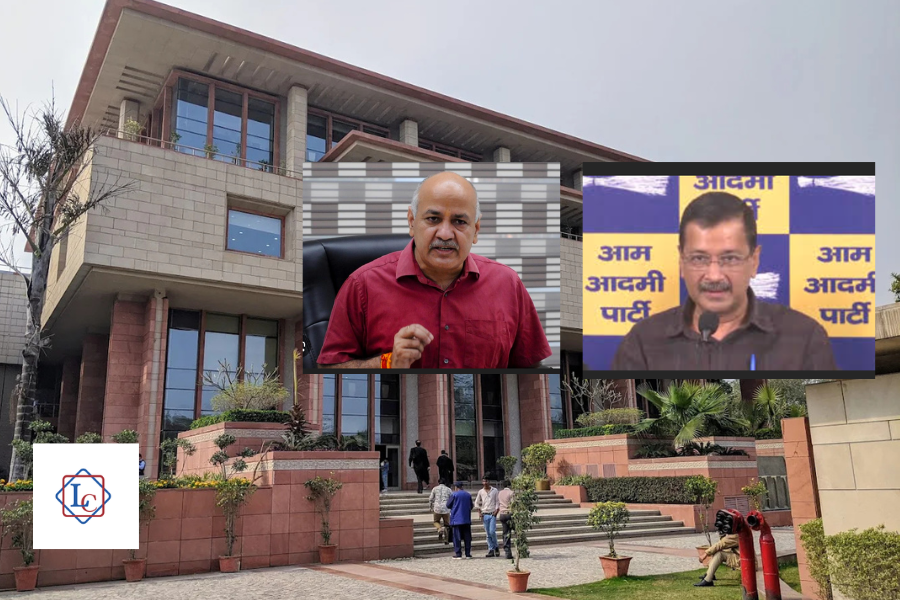
The Delhi High Court has granted former Chief Minister Arvind Kejriwal, Manish Sisodia and 21 others time till April 5 to file replies to the CBI’s revision petition challenging their discharge in the excise policy case. The CBI had opposed the adjournment, calling the trial court order “perverse.”
THE Delhi High Court on Monday granted former Chief Minister Arvind Kejriwal, former Deputy Chief Minister Manish Sisodia and 21 others time to file their responses to the Central Bureau of Investigation’s revision petition challenging their discharge in the excise policy case.
Justice Swarana Kanta Sharma listed the matter for further hearing on April 6, giving the respondents until April 5 to submit their replies, and clarified that the interim order passed on March 9 would continue to remain in operation.
The hearing opened with Justice Sharma asking whether the respondents were seeking time to file replies. Senior advocate N Hariharan, appearing for Kejriwal, informed the court that an SLP had already been filed before the Supreme Court challenging the high court’s March 9 order which had stayed the trial court’s remarks against a CBI officer.
He also told the court that a separate writ petition had been filed under Article 32 of the Constitution challenging the Delhi High Court Chief Justice’s refusal to transfer the case from Justice Sharma’s bench.
Solicitor General Tushar Mehta, appearing for the CBI, did not object to the respondents’ right to challenge the high court’s order before the Supreme Court but cautioned that if the SLP was being cited as a ground for seeking adjournment, the respondents must ensure that the petition was listed before the apex court within the week.
He urged the court not to grant more than a week’s time to file responses, contending that a formal reply or rejoinder was unnecessary because the entire trial court record was already before the high court.
Mehta described the trial court’s February 27 discharge order as “perverse” and said that, “It cannot remain on record even for a second more than what is necessary.” He further submitted that the continued existence of the order amounted to prejudice to the system and to the litigant, namely the investigating agency. On the respondents’ conduct more broadly, Mehta remarked that, “This is a pattern. Make allegation, run away.”
Hariharan, however, pointed out that the impugned order runs into nearly 500 pages and that the defence required adequate time to respond to the allegations raised in the CBI’s revision petition. He requested the court to record that the SLP had been filed, as it may have a bearing on the proceedings. Counsel for the other accused also argued that there was no urgency and that no prejudice would be caused to the CBI if reasonable time was granted.
Justice Sharma, while granting time, observed that, “I have not received any stay yet… till the court gets an order staying the proceedings, the case has to proceed.” The court also noted that Kejriwal and the other accused had not appeared on the first day of the hearing, when they were directed to file replies, and were now seeking additional time.
The hearing took place against the backdrop of a parallel legal battle over the assignment of the case itself. Kejriwal had written to Delhi High Court Chief Justice Devendra Kumar Upadhyaya on March 11, seeking transfer of the CBI’s revision petition to another bench on grounds of apprehended bias.
He cited a “grave, bona fide, and reasonable apprehension” that the proceedings before Justice Sharma may not receive an impartial hearing. The Chief Justice declined the request, stating that the case had been assigned as per the roster and that any call for recusal had to be taken by the judge concerned.
Having exhausted the administrative route, Kejriwal and Sisodia moved the Supreme Court on March 15 under Article 32, challenging both the Chief Justice’s refusal and Justice Sharma’s March 9 order. Their petitions point to the fact that Justice Sharma, while hearing the CBI’s revision petition on March 9, recorded a prima facie view that certain observations of the trial court at the charge stage appeared erroneous, without hearing the discharged accused.
The court had also stayed the trial court’s recommendation for departmental action against a CBI officer and directed the trial court hearing the connected Enforcement Directorate case to defer proceedings, despite the ED not being a party before her.
The underlying case relates to the Delhi Excise Policy of 2021-22, which sought to privatise liquor trade in the national capital. The CBI and the ED had alleged that the policy was designed to confer undue benefits on select private licensees in exchange for kickbacks.
On February 27, the Rouse Avenue Court discharged all 23 accused, including Kejriwal, Sisodia and former Telangana MLC K Kavitha, holding that the CBI had failed to establish a prima facie case. Special Judge Jitendra Singh had criticised the investigation in strong terms, observing that the agency’s conspiracy theory was built on conjecture rather than admissible evidence and that Kejriwal had been implicated without any cogent material.
The CBI challenged the discharge order before the high court through a revision petition, arguing that the trial court had misapplied settled principles governing the framing of charges and had conducted what amounted to a detailed evaluation of evidence, which was impermissible at that preliminary stage.
The matter will next be heard on April 6.
Case title: CBI v. Kuldeep Singh & Ors., Crl. Rev. Petition No. 134 of 2026


Leave a Reply